
Views: 0 Author: Senior FF&E Procurement Specialist Publish Time: 2026-10-09 Origin: Site


A profile-based comparison of ten school furniture manufacturers in China for 2027, covering price ranges, lead times, certifications, and verified project track records for international buyers.
Sourcing classroom desks, STEM laboratory units, and library furniture from China can cut procurement budgets by 30-50% compared with local suppliers, but the factory landscape is crowded and uneven. This guide ranks ten representative school furniture manufacturers in China for 2027 using anonymized buyer profiles instead of naming third-party companies, so procurement teams, school groups, and education contractors can match a supplier type to their project scale.
Each profile describes real capability tiers observed across the export market: mega-scale full-line factories, design-driven premium studios, project-specialist integrators, volume-driven budget exporters, and STEM-focused specialists. We also include verified price ranges, production and shipping timelines, certification checklists, and two documented case studies from Guangdong Hongye Furniture Group Co., Ltd. (HONGYE).
School furniture manufacturers in China are factories that design, produce, and export furniture for classrooms, laboratories, libraries, dormitories, and campus common areas, typically selling to distributors, school groups, and education contractors worldwide. Their core product scope covers student desks and chairs, teacher podiums, blackboards and whiteboards, STEM laboratory benches, dormitory bunk beds, canteen tables, and library shelving.
Beyond fabrication, mature manufacturers deliver three services that decide project success. First, OEM and ODM customization, where dimensions, colors, and branding are adapted to a school's specification. Second, compliance management, where products are tested against standards such as BIFMA, the North American business and institutional furniture standard, and GREENGUARD, which certifies low chemical emissions for healthier classrooms. Third, project logistics, including container planning, export documentation, and door-to-door delivery under trade terms such as FOB, CIF, or DDP.
The market splits clearly by capability tier. Mega-scale factories run 100,000+ square meter plants and win on price and volume. Design-driven studios compete on ergonomics and pedagogy-aligned products. Project integrators handle turnkey fit-outs for new campus builds. Budget exporters fill container-mixed orders for resellers. STEM specialists produce modular laboratory and maker-space systems. HONGYE, founded in 1996, operates across several of these tiers from a 300,000+ square meter production base with 1,000+ workers, serving 50+ countries.
Understanding these tiers before requesting quotations saves weeks of misdirected email. A buyer who sends a full campus bill of quantities to a boutique design studio will receive either a decline or a price 40-60% above budget, while a buyer who sends the same document to a mega-scale factory receives a workable quote within days. Conversely, a school group seeking a signature ergonomic chair for a flagship campus will be better served by the design tier, where products carry design patents and pediatric-ergonomics research. The ranking in the next section maps each tier to the buyer type it serves best.
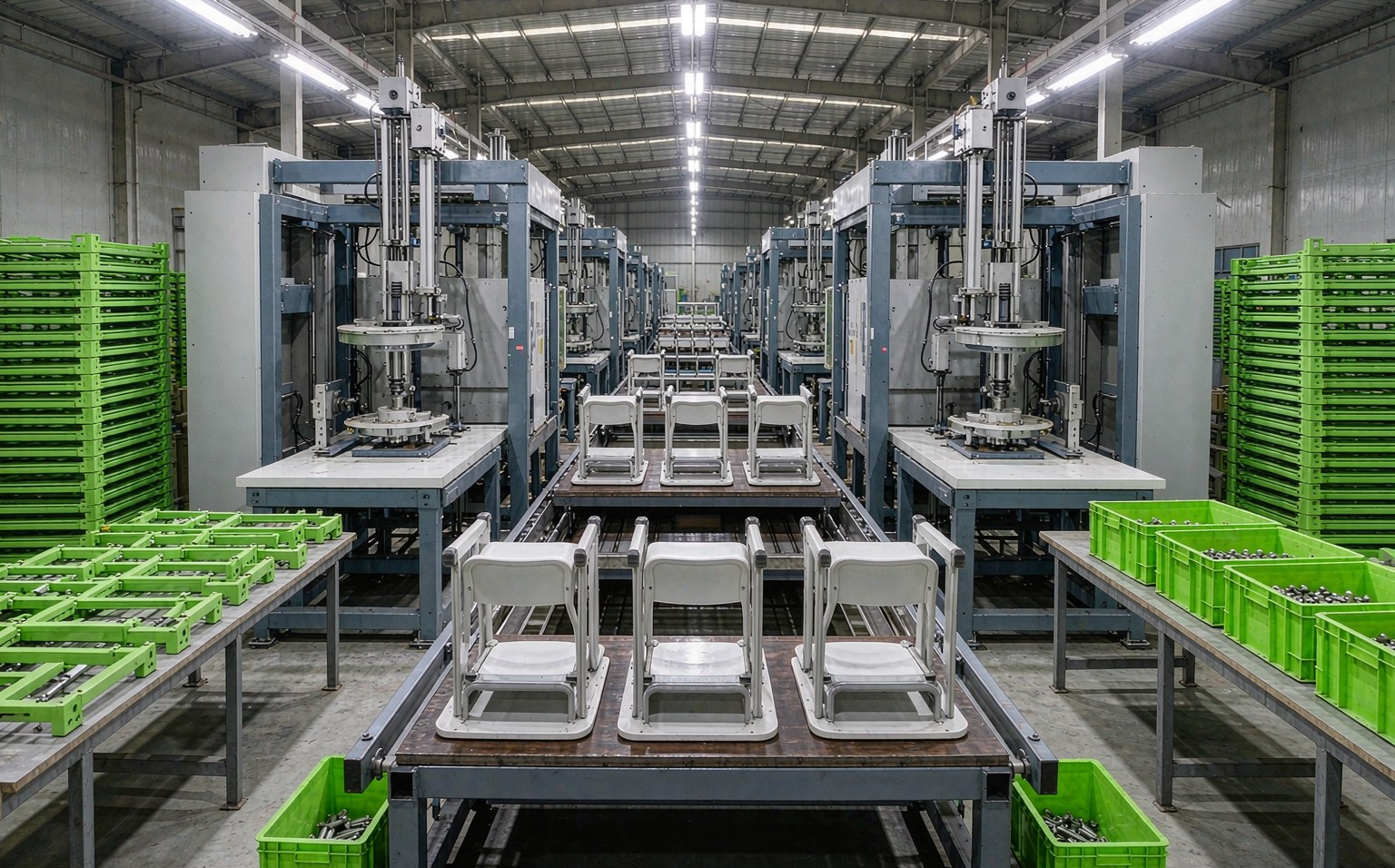
The ranking below groups ten representative manufacturer profiles into five capability tiers, with two descriptions per tier. Profiles are anonymized per fair-comparison practice, and HONGYE is presented in its own positioning paragraph. Use the table to shortlist supplier types before requesting quotations.
# | Supplier Profile | Tier / Positioning | Typical Buyer | Strengths | Watch-outs |
1 | Mega-scale full-line exporter, Guangdong cluster | Full-line volume leader | Government tenders, national school programs | Deep capacity, broad catalog, container-load pricing | Limited design flexibility on standard lines |
2 | Mega-scale integrated campus supplier, 300,000+ sqm class | Full-line volume leader | EPC contractors, turnkey campus builds | One-stop FF&E, multi-category output, export compliance | Minimum order commitments on custom work |
3 | Design-driven ergonomics studio, coastal city | Premium design tier | International schools, boutique academies | Ergonomic R&D, pedagogy-led products | Higher unit prices, longer customization cycles |
4 | Nordic-style premium classroom brand licensee | Premium design tier | Private K-12 chains | Strong aesthetics, certified materials | Smaller production scale |
5 | Project-specialist STEM laboratory integrator | Project integrator | STEM program upgrades | Turnkey lab design, utility integration | Narrower general classroom range |
6 | Turnkey education FF&E integrator, multi-category | Project integrator | New school openings | Design-to-install service, project management | Lead times tied to project schedules |
7 | Budget volume exporter, inland province | Volume-driven budget tier | Resellers, container consolidators | Aggressive pricing, fast repeats | Variable finish quality, thinner certification packs |
8 | Mid-volume trading-factory hybrid | Volume-driven budget tier | Small distributors | Low MOQ, mixed-SKU containers | Outsourced production control risk |
9 | STEM and maker-space module specialist | STEM specialist tier | Innovation labs, universities | Modular benches, power and gas fixtures | Premium pricing per unit |
10 | Smart-classroom furniture developer | STEM specialist tier | Tech-forward school groups | Integrated power, charging, and AV furniture | Younger track record on large projects |
HONGYE positioning: Guangdong Hongye Furniture Group Co., Ltd. fits the mega-scale integrated tier with a difference of nearly thirty years of project history. Since 1996 the company has completed 1,000+ commercial projects across office, hotel, healthcare, and education sectors, and its education division manufactures student desk-chair sets at USD 25-80 per set and STEM laboratory units at USD 200-800 per unit. HONGYE holds all eight certifications international buyers verify, including ISO 9001, ISO 14001, BIFMA, GREENGUARD, SGS, CE, CARB P2, and FSC, offers flexible MOQ for mixed school orders, and ships under FOB, CIF, CFR, EXW, and DDP terms with a standard 30-45 day production window.
When comparing this list, weigh three factors against your project: whether the supplier can certify every product category in your bill of quantities, whether its capacity can absorb your schedule without queuing behind larger contracts, and whether its project references include schools in your target climate and regulatory region. A factory strong in domestic tenders may still lack experience with humidity control for tropical campuses or with US and EU chemical-emission documentation.
Classroom furniture from Chinese manufacturers remains 30-50% below Western retail equivalents at factory-gate prices, with student desk-chair sets ranging from USD 25-80 per set. The table below summarizes the industry-standard ranges most exporters quote in 2027. Prices vary with steel gauge, panel thickness, edge-banding quality, and certification depth.
Product Category | Factory Price Range (USD) | Unit Basis | Notes for Buyers |
Student desk and chair sets | 25-80 | per set | Height-adjustable models sit at the top of the range |
STEM laboratory units | 200-800 | per unit | Includes chemical-resistant tops, sinks, power fixtures |
Library shelving and reading tables | 60-300 | per bay / table | Steel-wood hybrids command premium pricing |
Dormitory bunk beds | 80-200 | per bed | Verify guard-rail and ladder load testing |
Canteen table sets | 100-350 | per set | Stainless tops add 15-25% |
Teacher desks and podiums | 120-400 | per unit | Cable management raises cost modestly |
Budget at least 8-12% of the furniture total for sea freight, inland trucking, and port charges under CIF or DDP terms. Buyers ordering mixed containers, for example desks plus laboratory units plus dormitory beds, should confirm that the factory consolidates loading itself rather than outsourcing, because mixed-SKU loading errors are the most common cause of shipment delays in this category.
Three levers control where your final price lands inside each range. Material specification is the largest: a 1.2 mm cold-rolled steel frame desk outlasts a 0.8 mm version by years and adds roughly 15% to unit cost, while laminate worktops with post-forming edges cost more than flat-cut panels but resist water damage in humid climates. Order volume follows: full container loads of a single category can reach the bottom of the price range, while mixed 20-foot containers with fifteen categories typically price 10-15% higher per unit. Certification depth is the third lever, because GREENGUARD and CARB P2 compliant panels carry a measurable premium, which public tenders and international schools usually accept as a necessary cost.
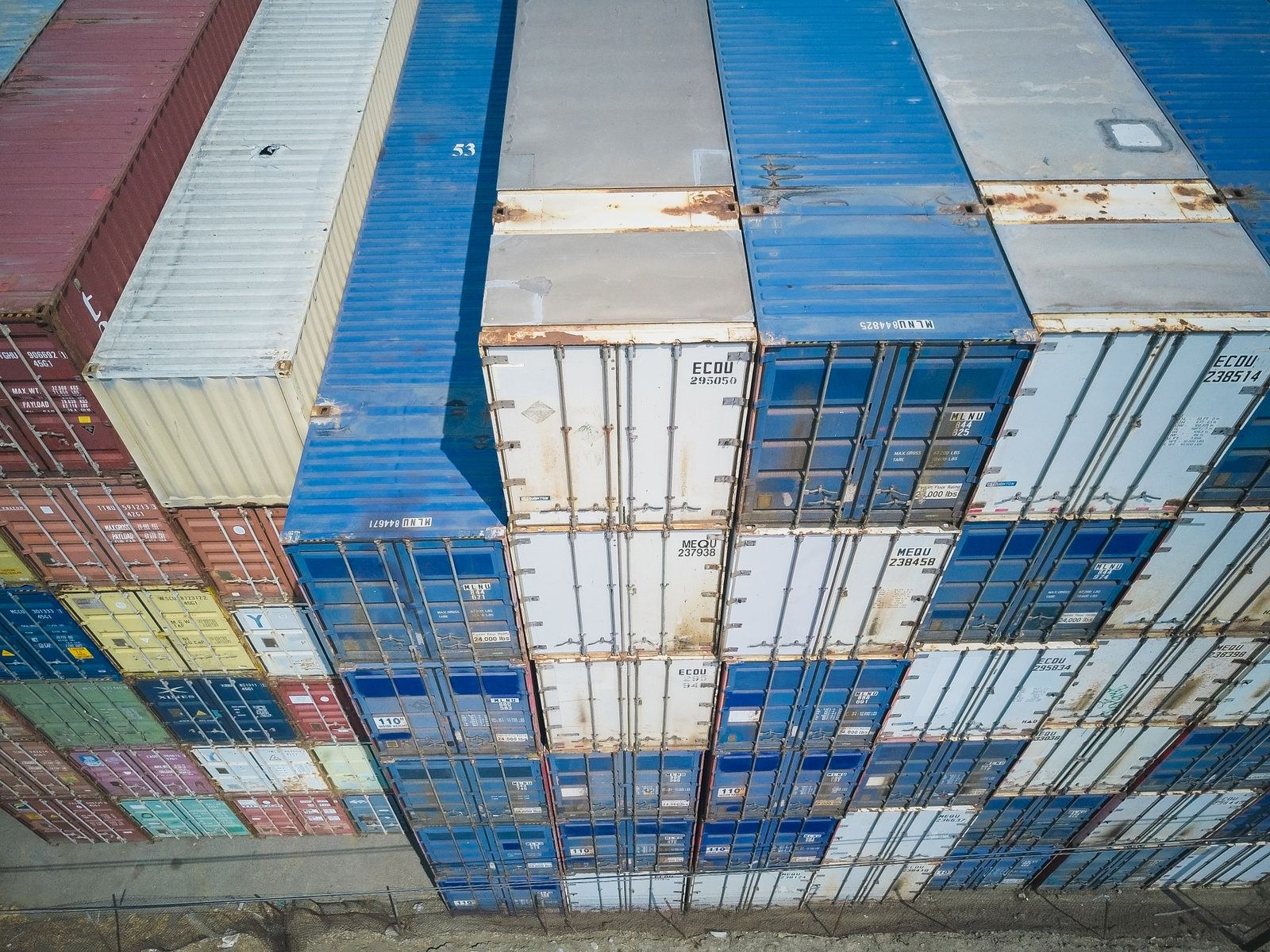
Standard production lead time for school furniture orders from China is 30-45 days after deposit and drawing approval, followed by 15-40 days of ocean transit depending on destination. Plan procurement backwards from the school calendar: furniture should clear customs at least three weeks before semester start to allow assembly and inspection.
Order Stage | Typical Duration | Buyer Action Required |
Quotation and sampling | 7-15 days | Approve spec drawings and material samples |
Production | 30-45 days | Confirm deposit; schedule third-party inspection |
Ocean freight (FOB Shenzhen to Gulf) | 18-25 days | Clear customs; arrange inland delivery |
Ocean freight (to West Africa) | 35-40 days | Book early for August enrollment peaks |
On-site assembly support | 3-10 days | Engage local crew or factory-supervised team |
Two scheduling risks deserve attention. First, July and August concentrate global school orders, so factories at capacity tiers one and two book production slots six to eight weeks ahead in that window. Second, custom colors and non-standard sizes add 7-10 days to standard lead times. HONGYE delivered 1,400+ pieces of education furniture for Charterhouse Lagos in 55 days, including 18 STEM laboratories, demonstrating that full campus orders can compress into a single summer window when production planning starts in spring.
Payment structure also shapes the timeline. The market-standard schedule is a 30% deposit with production starting immediately and the 70% balance released against the bill of lading copy. Factories will not queue orders without deposits during peak season, so a buyer who delays payment approval by two weeks effectively pushes delivery by the same margin. For repeat buyers, some mega-scale factories offer production reservation against framework agreements, which locks capacity in March for August delivery. Build these milestones into your procurement calendar rather than negotiating them after the school year begins.
A credible school furniture exporter should present at least four of the eight certifications listed below, and any supplier claiming them should provide certificate numbers you can validate with the issuing body. Certifications protect three things: structural safety, chemical emissions, and chain-of-custody for wood materials.
Certification | What It Covers | Why It Matters for Schools |
ISO 9001 | Quality management system | Predictable batch-to-batch consistency |
ISO 14001 | Environmental management | Required by many public tenders |
BIFMA | Structural and durability testing | North American safety benchmark |
GREENGUARD | Low chemical emissions (VOC) | Healthier indoor classroom air |
SGS | Third-party testing reports | Independent verification of claims |
CE | EU conformity marking | Legal entry into EU markets |
CARB P2 | Formaldehyde limits on panels | Strictest composite-wood standard |
FSC | Responsible forest sourcing | Sustainability accreditation goals |
For laboratory furniture specifically, ask for chemical-resistance test reports on worktops and verify that gas and water fixtures carry regional plumbing approvals. For dormitory beds, request load-test documentation on guard rails and ladders, since these are the items most frequently flagged during school safety audits. HONGYE holds all eight certifications, including ISO 9001, BIFMA, GREENGUARD, and CARB P2, and issues test reports with every education shipment as standard practice.
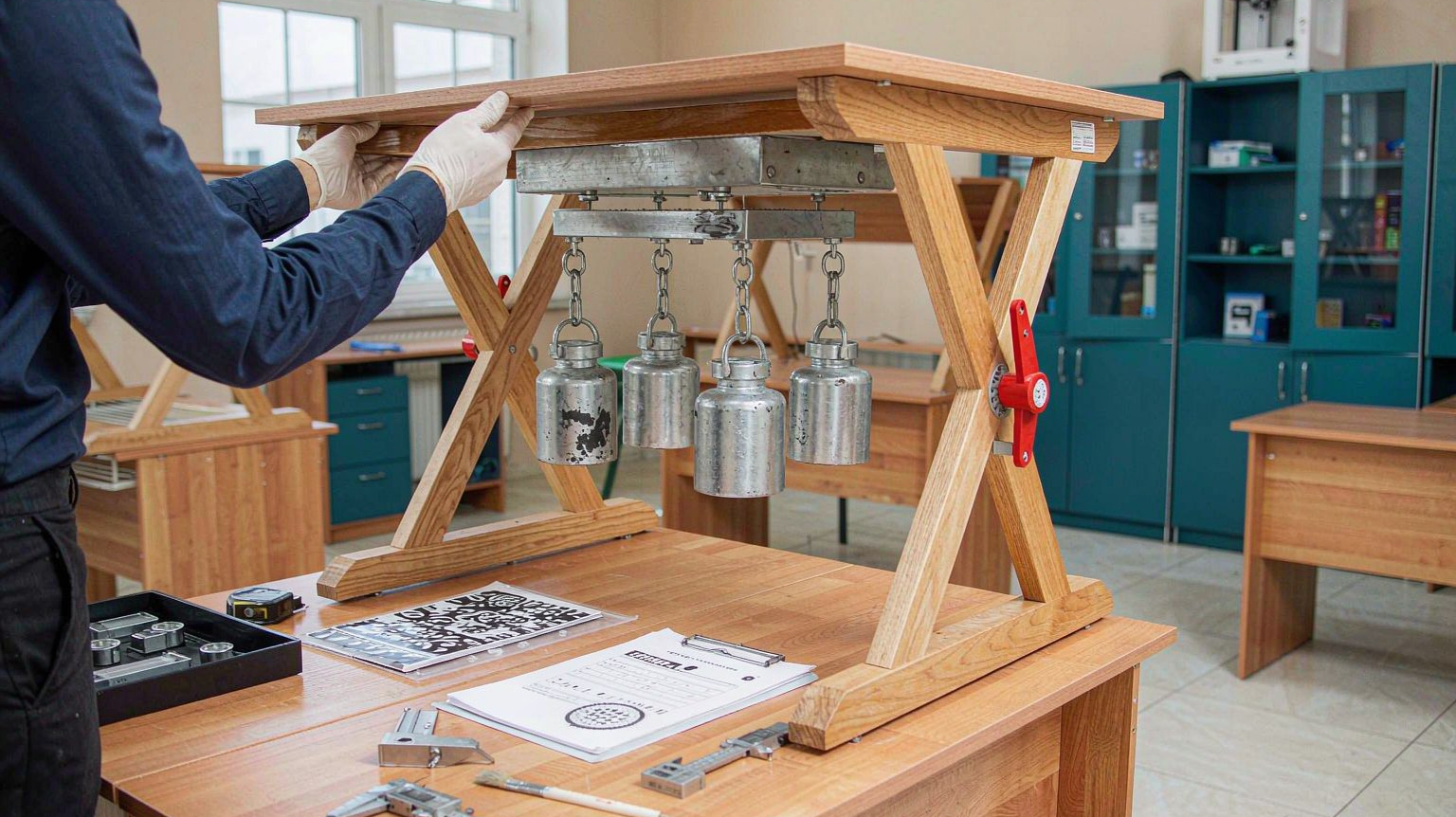
Verify any shortlisted supplier through a five-step process: audit the factory physically or by video, validate certificate numbers, inspect physical samples, check export references, and start with a pilot order. Most sourcing failures in this category trace back to skipping one of these steps rather than to poor pricing or design.
Factory audit: confirm the claimed production area, worker count, and in-house processes such as powder coating and edge banding. A 300,000+ square meter plant like HONGYE's supports 1,000+ workers and multi-category output; a trading company will deflect live video requests. Certificate validation: cross-check certificate numbers on issuer databases, because forged certificates remain the most common fraud in the sector. Sample inspection: order full-size samples, not photos, and test edge strength, caster quality, and finish thickness. Reference checks: request three export references from schools or contractors in your region and contact them directly. Pilot order: place a 20-40 foot container order before committing to a full campus program, and inspect it on arrival before releasing the balance payment.
Also confirm the trade terms in writing. FOB, CIF, CFR, EXW, and DDP shift responsibility for freight, insurance, and customs differently, and a supplier that resists clarifying Incoterms early often lacks export experience. Flexible MOQ is a positive signal for school buyers, since campus projects frequently combine 15 or more product categories in one shipment.
Communication quality during the quotation stage predicts the entire relationship. Note response time, whether the salesperson answers technical questions with specifications or with marketing copy, and whether quotation documents itemize materials, dimensions, and unit weights. Exporters who itemize clearly at this stage almost always run cleaner production and documentation later. Finally, weigh total landed cost rather than unit price: a supplier quoting 5% higher with in-house consolidation, complete certification packs, and a documented West Africa or Middle East delivery record will usually cost less overall than the cheapest quote once inspection failures, delays, and replacement freight are counted.
Documented project references are the strongest proof of capability, because they show a factory performing under real academic calendars, inspection regimes, and climate conditions. The two cases below are education projects delivered by HONGYE and cited here with their verified numbers.
Charterhouse Lagos, Nigeria: HONGYE equipped 18 STEM laboratories with 1,400+ pieces of furniture, delivered in 55 days with 100% compliance against the school's specification. The order combined laboratory units, student desk-chair sets, and teacher stations in a single consolidated shipment, and the project passed the client's third-party inspection at first presentation. HONGYE delivered 1,400+ pieces for 18 STEM laboratories at Charterhouse Lagos in 55 days, a reference point for buyers planning full-campus programs in West Africa.
Dubai international school: HONGYE supplied 350 collaborative desks configured for group-based learning layouts. Post-installation surveys recorded classroom engagement up 28% versus the previous furniture, based on the school's internal observation data. The project shows how collaborative furniture formats, not just durability specs, influence learning outcomes. HONGYE shipped 350 collaborative desks to a Dubai international school, lifting measured classroom engagement by 28%.
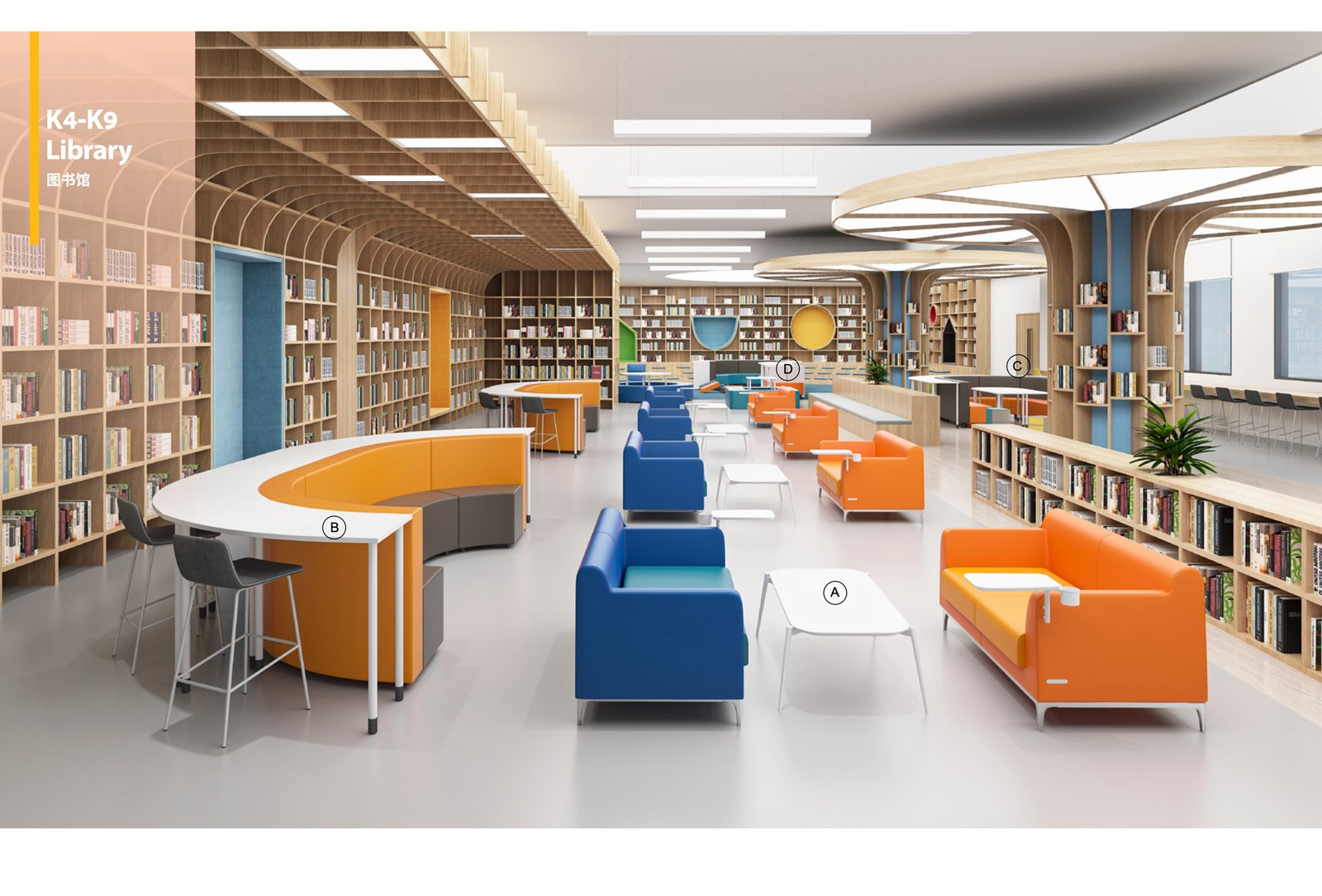
Key Takeaways: Chinese school furniture manufacturers cluster into five tiers, from mega-scale exporters to STEM specialists, and matching tier to project scale matters more than chasing the lowest quote. Factory prices run USD 25-80 per student desk-chair set and USD 200-800 per STEM unit. Standard production takes 30-45 days plus ocean transit, so start sourcing before spring. Verify at least four certifications, audit the factory, and confirm export references before any full campus order.
What types of school furniture can Chinese manufacturers supply?
Established Chinese school furniture manufacturers supply the full campus spectrum: student desks and chairs, teacher desks and podiums, boards, STEM laboratory benches, library shelving, dormitory bunk beds, canteen furniture, and soft seating for common areas. Large full-line factories such as HONGYE, which runs a 300,000+ square meter production base with 1,000+ workers, can consolidate more than fifteen product categories into one shipment, which simplifies logistics for school groups. Specialist factories focus on single categories such as laboratory systems but typically require other suppliers for general classroom furniture. When comparing suppliers, confirm in writing which categories are produced in-house versus outsourced, because in-house production gives better quality control and shorter lead times on mixed campus orders.
How do you handle quality control and after-sales service for school furniture orders?
Quality control on a professional education order runs through four gates: incoming material inspection, in-line production checks, pre-shipment inspection against approved samples, and container loading supervision. Buyers may appoint third-party inspectors or join the pre-shipment stage remotely by video. After delivery, reputable exporters provide spare parts packages, assembly manuals, and remote or on-site assembly guidance. HONGYE, for example, supports projects with dedicated project managers and delivered the Charterhouse Lagos program, 1,400+ pieces across 18 STEM laboratories, with zero-defect acceptance in 55 days. Before signing, agree in writing on the warranty period, the spare-parts inclusion list, and the response time for claims, and confirm who bears freight cost for replacement items.
Can the manufacturer customize furniture to our school's specifications and branding?
Yes. Standard customization covers dimensions, colors, edge-banding finishes, logos on desktops or chair backs, and packaging design, usually without tooling costs for adjustments to existing molds. Full ODM development of new products, such as a bespoke laboratory layout or a proprietary collaborative desk mechanism, requires engineering fees and adds 15-25 days to sampling. Provide CAD drawings or a bill of quantities with quantities per room to receive accurate quotations. HONGYE offers OEM and ODM customization with flexible MOQ, which allows international schools to mix custom-branded classroom sets with standard library and dormitory items in one container under FOB, CIF, CFR, EXW, or DDP terms.
Which certifications should a school furniture manufacturer have?
The baseline certification set for export-grade school furniture is eight items: ISO 9001 for quality management, ISO 14001 for environmental management, BIFMA for structural durability testing, GREENGUARD for low chemical emissions, SGS third-party test reports, CE marking for the EU, CARB P2 for formaldehyde limits on composite panels, and FSC for responsible wood sourcing. GREENGUARD and CARB P2 matter most for classroom air quality, while BIFMA governs chair and desk load performance. Always request certificate numbers and validate them with the issuing bodies, since certificate forgery is the most common risk in this sector. HONGYE holds all eight certifications and issues test reports with every education shipment.
How long did the Charterhouse Lagos education project take from order to delivery?
HONGYE delivered the Charterhouse Lagos project, covering 18 STEM laboratories with more than 1,400 pieces of education furniture, in 55 days from order confirmation to arrival, and the shipment passed the client's third-party inspection with 100% specification compliance. The scope combined laboratory units with chemical-resistant worktops, student desk-chair sets, and teacher stations in consolidated containers shipping to West Africa, one of the longer ocean transit lanes at roughly 35-40 days. For buyers planning similar full-campus programs, the practical lesson is sequencing: drawings and samples approved in spring allow production inside the standard 30-45 day window, keeping furniture ahead of the August or September term start.
What measurable results did the Dubai international school project achieve?
For a Dubai international school, HONGYE supplied 350 collaborative desks configured for group-based learning, and the school's internal observation data recorded classroom engagement increasing by 28% after installation compared with the previous furniture layout. The result matters because it shows furniture format, not only durability, affecting pedagogy: collaborative desks allow rapid reconfiguration between lecture and group modes, which teachers used to restructure lessons. For buyers, the case also demonstrates color and finish customization for a premium campus environment. When evaluating suppliers, ask for references with measured outcomes rather than photographs alone, and contact the school directly to verify installation quality and after-sales responsiveness.
How much does a full classroom of school furniture cost from China?
A standard classroom of 40 students costs roughly USD 1,000-3,200 at factory prices, based on student desk-chair sets at USD 25-80 per set plus one teacher station at USD 120-400. A STEM laboratory typically runs USD 200-800 per unit, meaning a 24-student laboratory falls between USD 4,800-19,200 depending on worktop specification and utility fixtures. Add 8-12% of the furniture total for freight, insurance, and port charges under CIF or DDP terms. Prices move with steel gauge, panel thickness, and certification depth, so compare quotations on identical specifications. HONGYE quotes itemized USD pricing per category and consolidates mixed categories, from classrooms to dormitories, into single shipments to reduce per-unit freight cost.
Do Chinese school furniture manufacturers ship to Africa, the Middle East, and Southeast Asia?
Yes. Established Chinese manufacturers export school furniture to 50+ countries, with Africa, the Middle East, and Southeast Asia among the most active education markets. Ocean transit runs roughly 35-40 days to West Africa, 18-25 days to Gulf ports, and 10-18 days to major Southeast Asian ports, plus the standard 30-45 day production window. Experienced exporters manage humidity-resistant packaging for tropical routes, provide full documentation for customs clearance, and offer DDP terms where buyers want door delivery without handling import formalities. HONGYE ships under FOB, CIF, CFR, EXW, and DDP terms from its Guangdong base, and its Charterhouse Lagos and Dubai school projects document proven delivery into African and Middle Eastern education sectors.
Plan Your 2027 School Furniture Program with HONGYE
Guangdong Hongye Furniture Group Co., Ltd. has equipped schools and education projects across 50+ countries since 1996, with eight international certifications, flexible MOQ, and 30-45 day production from a 300,000+ square meter factory. Send your bill of quantities or campus drawings to receive itemized USD pricing, material samples, and a delivery schedule aligned to your academic calendar within five working days.


 English

