
Views: 0 Author: Site Editor Publish Time: 2025-08-26 Origin: Site


Creating an effective learning environment starts with choosing the right educational furniture. From ergonomic student desks to collaborative maker-space stations, every piece influences comfort, productivity, and engagement. This guide delivers practical insights into selecting, evaluating, and purchasing classroom furniture that meets budget, safety, and pedagogical goals. Designed for administrators, designers, and procurement specialists, it offers an authoritative roadmap for making informed furniture investments.

You will learn:
The key factors to consider when purchasing educational furniture
In-depth analysis of furniture types, materials, and ergonomic features
Real-world examples of successful classroom furnishings
Informative comparison tables covering specifications, pricing, and applications
Final recommendations and a concise FAQ to address common concerns
The right educational furniture transforms classrooms and learning spaces into environments that foster focus, collaboration, and creativity. In an era where flexible learning modalities and technology integration are paramount, school administrators and designers must navigate a vast market of desks, chairs, tables, storage units, and soft seating options. This guide unpacks critical considerations—from safety standards and durability requirements to ergonomic design and cost-efficiency—enabling you to align furniture purchases with educational objectives, facility constraints, and budget realities.
This article is structured into four main sections, each exploring a vital aspect of the procurement process:
1. Understanding Educational Furniture Categories
2. Ergonomics, Durability, and Safety Standards
3. Budgeting, Cost Analysis, and Vendor Selection
4. Space Planning, Customization, and Sustainability
Each section includes comparison tables and at least one real-world example or case study. The conclusion offers final recommendations, followed by a FAQ addressing six common questions.

Choosing the ideal furniture begins with understanding the distinct categories and their applications within educational environments.
Student desks and chairs form the core of any classroom. Variations include:
Fixed Desks and Chairs: Traditional single-station units, cost-effective and sturdy.
Adjustable Sit-Stand Desks: Promote movement and accommodate different student heights.
Collaborative Pod Desks: Cluster designs supporting group work and flexible seating arrangements.

Table: Comparison of Common Student Desk and Chair Options
| Type | Features | Typical Price Range | Ideal Use Case |
Fixed Desk with Chair | Steel frame, laminate top, stackable chairs | $100–$200 per set | Standard classrooms |
Adjustable Sit-Stand Set | Height-adjustable, ergonomic, foot rest option | $250–$400 per set | Modern classrooms, health-focused labs |
Collaborative Pod Cluster | Modular, wheels, integrated power ports | $500–$800 per pod | Project-based learning spaces |
Real-World Example:
At Oakwood Middle School, installing adjustable sit-stand desks for eighth graders led to a 30% reduction in sedentary complaints and improved classroom engagement over a semester.
Tables designed for group activities encourage teamwork and dynamic lesson formats. Key types include:
Rectangular Tables with Power Modules
Round Tables for Equal Engagement
Modular Tables that Reconfigure Easily
Table: Collaborative Table Specifications
| Table Type | Seating Capacity | Technology Integration | Mobility |
Rectangular with Ports | 6–8 students | USB, power outlets | Fixed |
Round Collaborative Table | 4–6 students | Optional central hub | On casters |
Modular Folding Tables | 2–10 students | Surface grommets only | Lightweight |
Case Study:
A high school in Austin replaced four standard tables with modular folding tables, enabling rapid reconfiguration between lecture, lab, and testing modes, reducing setup time by 40%.
Effective storage solutions keep classrooms tidy and resources accessible. Options include:
Cubby and Locker Systems
Mobile Storage Carts
Integrated Under-Desk Storage
Table: Storage Unit Feature Comparison
| Unit Type | Capacity | Mobility | Security Features |
Cubby Lockers | 24–48 compartments | Fixed | Built-in locks |
Mobile Storage Cart | 5–10 drawers | On wheels | Optional padlock bars |
Under-Desk Drawers | 1–3 compartments | Fixed | None |
Real-World Example:
Riverside Elementary adopted mobile storage carts for art supplies, boosting lesson flexibility by allowing teachers to move materials between classrooms seamlessly.
Ensuring furniture meets ergonomic and safety standards is paramount for student health and compliance with regulations.
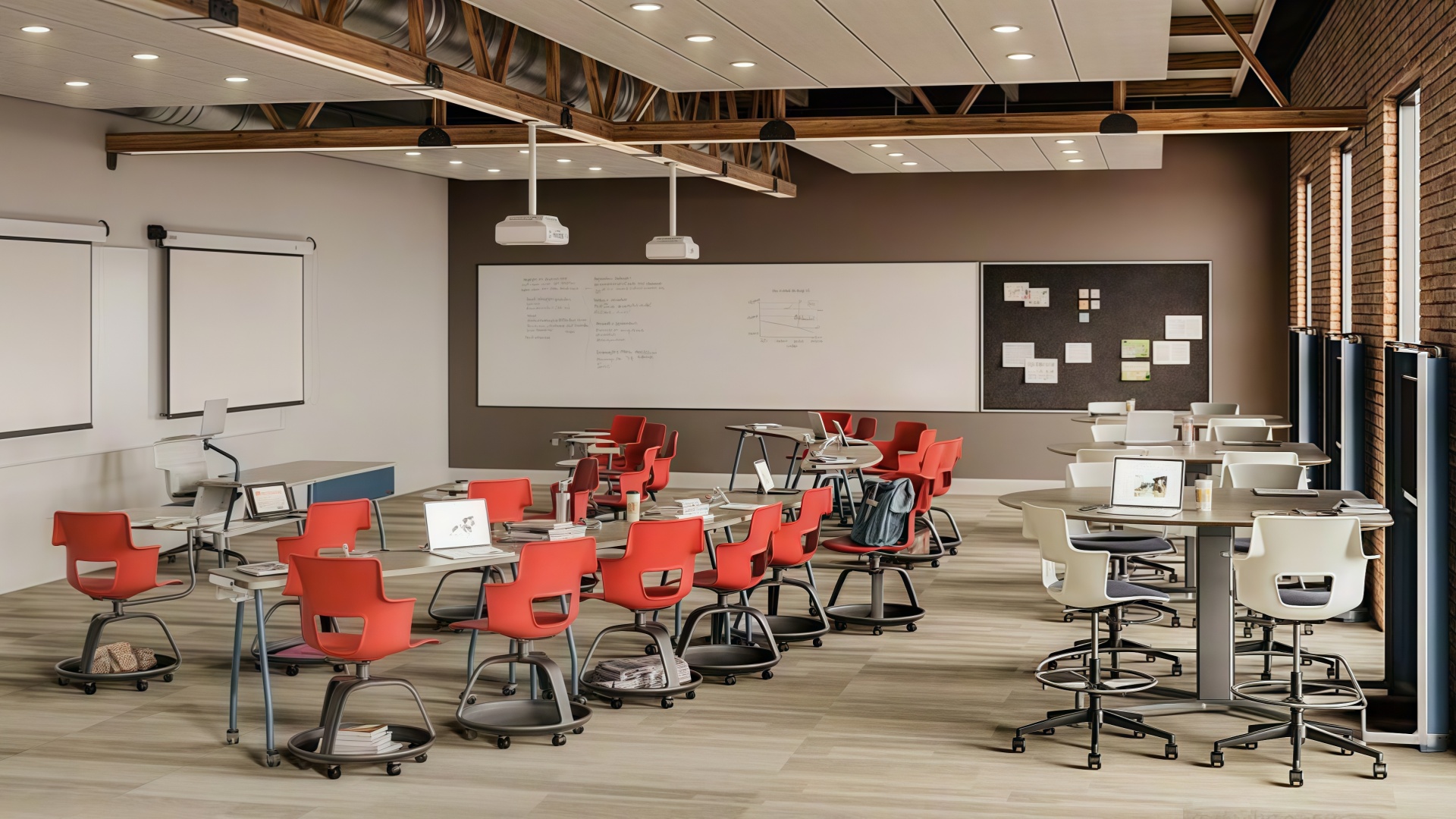
Key ergonomic considerations include:
Adjustable Height: Adaptable desks and chairs accommodate varied student sizes.
Seat Depth and Back Support: Chairs with contoured seats reduce fatigue.
Edge Design: Rounded edges prevent injuries.
Table: Ergonomic Criteria for Student Desks and Chairs
| Criterion | Recommended Specification |
Desk Height Range | 22–30 inches adjustable |
Chair Seat Depth | 14–17 inches |
Backrest Angle | 95–120 degrees recline |
Edge Radius | Minimum 0.25 inches radius |
Case Study:
Bright Futures Academy saw a 20% decline in posture-related complaints after switching to chairs with contoured seats and adjustable backrests.
Durable materials reduce lifecycle cost and maintenance:
High-Pressure Laminate (HPL): Scratch-resistant, easy to clean.
Powder-Coated Steel Frames: Corrosion-resistant, robust support.
Polypropylene Chairs: Impact-resistant, UV-stable for outdoor use.
Table: Material Durability and Maintenance Comparison
| Material | Durability | Maintenance Level | Cost Impact |
HPL Surfaces | High | Wipe clean with mild soap | Medium |
Powder-Coated Steel | Very High | Inspect finish annually | Medium–High |
Polypropylene Plastic | High | Occasional sanitization | Low |
Balancing initial outlay with long-term value guides procurement decisions.
Acquisition Costs: Base price, customization fees, shipping.
Installation Costs: Assembly, wiring for integrated technology.
Maintenance Expenses: Surface repairs, part replacements.
Table: Cost Breakdown for Classroom Furniture
| Cost Element | Individual Desks/Chairs | Collaborative Tables | Storage Units |
Base Price | $100–$250 per set | $500–$1,200 per unit | $150–$600 per unit |
Shipping & Handling | $20–$50 per set | $100–$200 per unit | $30–$80 per unit |
Installation | $30–$70 per set | $150–$300 per unit | $20–$60 per unit |
Annual Maintenance | $10–$30 per set | $100–$200 per unit | $10–$40 per unit |


Charterhouse Lagos | Education Project by Hongye Furniture
Effective layout and environmentally responsible choices enhance both functionality and institutional reputation.
Clear Circulation Paths: Maintain 3–4 feet between furniture clusters.
Zoning: Designate quiet study, group work, and presentation areas.
Flexibility: Choose mobile units to adapt to various teaching styles.
Table: Recommended Space Allocations
| Learning Zone | Area per Student | Furniture Type |
Individual Study | 6 sq ft | Single desks and chairs |
Group Collaboration | 10 sq ft per student | Modular tables and stools |
Presentation Area | 12 sq ft per student | High-top tables, stools |
Purchasing the right educational furniture demands a strategic balance of ergonomics, durability, cost-effectiveness, and sustainability. By assessing furniture categories, evaluating ergonomic standards, analyzing total cost of ownership, and planning flexible spaces, educational institutions can create environments that support both teaching excellence and student success. Prioritize adjustable designs, durable materials, and eco-friendly certifications to maximize long-term value and well-being.
Final Recommendations
Invest in adjustable, ergonomic student desks to accommodate diverse learners and promote healthy posture.
Incorporate modular collaborative tables to enable dynamic group activities and reconfigure spaces easily.
Select vendors with robust warranty, customization options, and proven sustainability practices.
Plan layouts with clear circulation paths, designated zones, and furniture mobility to support varied pedagogies.
1. What is the most important ergonomic feature in educational chairs?
Height adjustability combined with contoured back support ranks highest to ensure proper posture and reduce fatigue.
2. How do I calculate the right furniture budget for a new classroom?
Estimate acquisition, installation, and annual maintenance costs per unit, then multiply by the total units needed, adding a 10–15% contingency buffer.
3. Are modular tables worth the investment for small schools?
Yes; their reconfigurability allows multi-purpose use of limited space, reducing the need to purchase separate furniture sets.
4. How often should I replace classroom furniture?
High-traffic items like desks and chairs typically last 7–10 years; storage units may last up to 15 years with proper maintenance.
5. What certifications should I look for in sustainable furniture?
Seek FSC (Forest Stewardship Council) for wood, GREENGUARD for low chemical emissions, and ISO 14001 for environmental management systems.
6. Can technology integration be retrofitted into existing desks?
Yes; modular power modules, cable management trays, and desk-mounted charging hubs enable simple retrofitting without full replacements.


 English

