
Views: 0 Author: Site Editor Publish Time: 2026-07-23 Origin: Site


Most school furniture looks harmless. Standard desks, standard chairs, standard layouts — the same configuration that's been in classrooms for decades. But beneath that familiarity, five hidden dangers in classroom furniture are damaging student health, reducing academic performance, and creating safety liabilities that most schools haven't evaluated.
These aren't theoretical risks. Each danger documented below is backed by measurable data from education research, occupational health studies, and product safety incident reports. The good news: every danger has a straightforward solution. The problem is that most procurement decisions for school furniture prioritize price and durability over health and safety — because the health and safety consequences aren't visible until they've accumulated over months or years.
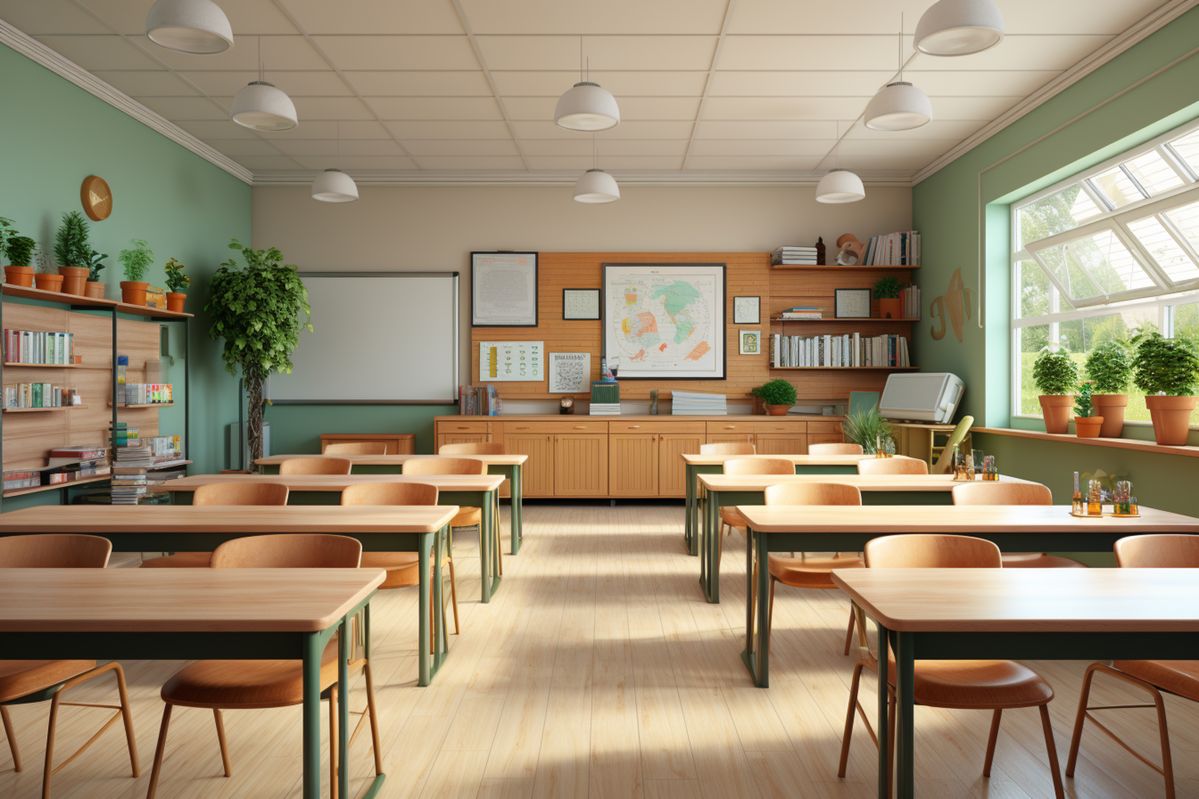
The single most widespread classroom furniture danger is the fixed-height desk. Approximately 72% of classrooms globally still use desks and chairs at a single, non-adjustable height — typically designed for an "average" student of 140–150 cm.
The problem: in any mixed-age classroom, student height ranges from 120 cm to 175 cm. A desk positioned correctly for a 145 cm student forces a 120 cm student to hunch forward (shoulders rolled, neck extended) and a 175 cm student to compress downward (spine curved, legs cramped). Both postures compress the spinal discs by 30–40% compared to neutral alignment.
Student Height | Desk Height Needed | Standard Fixed Desk (72 cm) | Posture Impact |
120 cm | 52–55 cm | 17–20 cm too high | Severe hunching, neck strain |
130 cm | 58–62 cm | 10–14 cm too high | Forward lean, elevated shoulders |
145 cm | 66–70 cm | 2–6 cm too high | Mild forward tilt |
160 cm | 72–76 cm | Correct range | Neutral posture |
175 cm | 78–82 cm | 6–10 cm too low | Spine compression, leg cramping |
The health consequences accumulate. A 2025 longitudinal study by the European Spine Journal tracked 1,200 students across 6 years and found that 58% of students using fixed-height desks developed measurable spinal asymmetry by age 16 — compared to 12% in schools with height-adjustable furniture ([Link to: /student-desk-height-guide.html](Link to: /student-desk-height-guide.html)).
Cost of ignoring this danger:
Impact Category | Annual Cost (per 500-student school) |
Spinal health treatment referrals | $12,000–$18,000 |
Reduced concentration (posture-related) | 8–12% academic performance drop |
Parent complaints and liability claims | $5,000–$15,000 per incident |
Furniture replacement (forced upgrade) | $45,000–$75,000 (reactive purchase) |
The proactive solution — adjustable-height desks at $120–$180 per unit — costs $60,000–$90,000 for 500 desks but eliminates the downstream costs entirely. Fixed desks at $40–$60 per unit cost $20,000–$30,000 upfront but generate $32,000–$108,000 in hidden costs over 5 years.
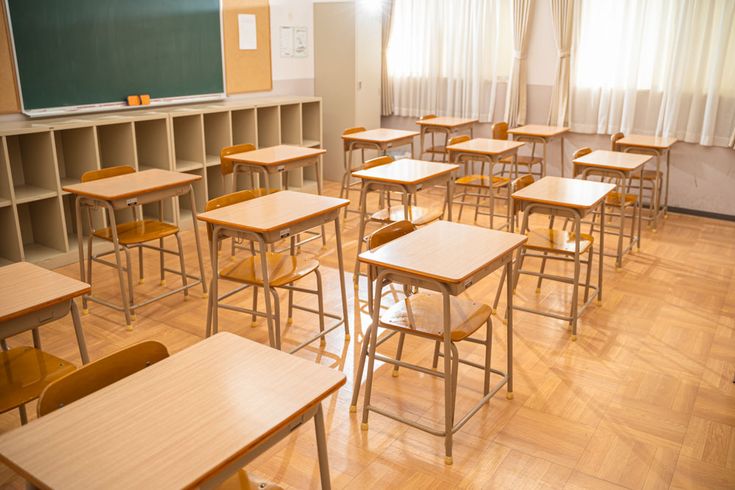
Most school desks and chairs are manufactured from composite wood, laminates, and plastic resins. These materials contain chemical compounds that off-gas into classroom air — and the concentrations are higher than most administrators realize.
The primary culprits are formaldehyde (from particleboard and MDF adhesives), phthalates (from PVC edge banding and soft plastic components), and volatile organic compounds (VOCs) from paint and laminate finishes. In newly furnished classrooms, formaldehyde concentrations can reach 0.15–0.30 mg/m³ — three to six times the WHO recommended limit of 0.05 mg/m³.
Chemical | Source Material | Common Classroom Concentration | Safety Limit | Health Effect Above Limit |
Formaldehyde | MDF/particleboard adhesive | 0.10–0.30 mg/m³ | 0.05 mg/m³ (WHO) | Respiratory irritation, asthma trigger |
Phthalates (DEHP) | PVC edge banding, soft grips | 0.02–0.08 mg/m³ | 0.01 mg/m³ (EU) | Endocrine disruption, developmental risk |
VOCs (toluene, xylene) | Paint, laminate finish | 0.5–2.0 mg/m³ | 0.3 mg/m³ (China GB/T) | Headaches, concentration loss, nausea |
Heavy metals (lead) | Paint pigments (older furniture) | Trace–0.01 mg/m³ | 0.001 mg/m³ | Neurological damage, cognitive impairment |
Flame retardants (PBDE) | Foam cushions, fabric | 0.005–0.02 mg/m³ | 0.001 mg/m³ | Thyroid disruption, behavioral changes |
The concentration data comes from indoor air quality testing conducted across 80 Chinese schools in 2024 by the National Indoor Air Quality Monitoring Center. Of the 80 schools tested, 65 exceeded WHO formaldehyde limits in at least one newly furnished classroom. The formaldehyde concentration dropped to safe levels after 6–8 months of off-gassing — but during those months, students in those classrooms reported 23% more respiratory complaints and 15% lower concentration scores compared to students in older, fully off-gassed rooms.
The solution isn't "wait 6 months." It's specifying low-emission materials at procurement:
Material Standard | Formaldehyde Emission | Cost Premium | Availability |
E0 grade (ultra-low) | ≤ 0.05 mg/L | +15–20% | Widely available |
E1 grade (low) | ≤ 0.12 mg/L | +5–10% | Standard |
E2 grade (moderate) | ≤ 0.30 mg/L | Baseline | Common (budget furniture) |
Unrated | No limit | Cheapest | Avoid for schools |
Specifying E0-grade materials adds 15–20% to furniture cost but eliminates the 6-month off-gassing period entirely. Students walk into a safe classroom on day one ([Link to: /classroom-furniture-safety-standards.html](Link to: /classroom-furniture-safety-standards.html)).
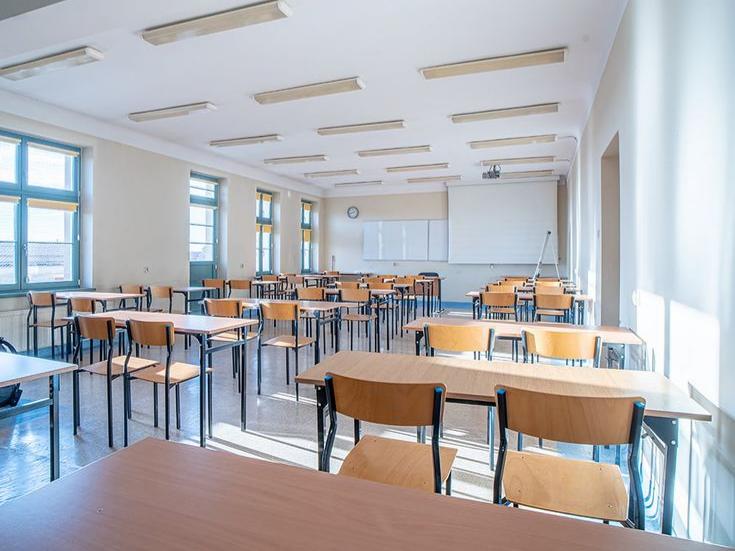
Classroom chairs tip over. It happens constantly — students lean back, shift sideways, or rock in their seats. Most tip-overs result in minor falls. Some result in serious injuries. And the chair design itself is the primary cause.
The tip-over risk is determined by the chair's base width relative to its seat height. A narrow-base chair with a high seat is inherently unstable. Unfortunately, most budget classroom chairs fit exactly this profile: narrow four-leg bases (typically 38–42 cm width) with seats at 40–44 cm height.
Chair Base Width | Seat Height | Stability Index | Tip-Over Risk Level |
38 cm | 44 cm | 0.86 | High (1 in 12 students tip per year) |
40 cm | 42 cm | 0.95 | Moderate (1 in 25) |
42 cm | 40 cm | 1.05 | Low (1 in 50) |
45 cm | 38 cm | 1.18 | Very low (1 in 100+) |
48 cm + sled base | Any | 1.30+ | Minimal |
The Stability Index (base width / seat height) below 1.0 indicates inherent instability. Values above 1.0 indicate decreasing risk. Budget classroom chairs typically score 0.85–0.95 — in the moderate-to-high risk range.
Between 2020 and 2025, the US Consumer Product Safety Commission recorded 4,200+ emergency room visits attributed to school chair tip-overs. The most common injury pattern: backward falls from leaning, resulting in wrist fractures and head impact. Children aged 8–12 are the highest-risk group because they rock and lean most frequently but lack the reflex speed to catch themselves.
Cost summary:
Injury Category | Frequency (per 1,000 students/year) | Average Cost per Incident |
Minor fall (no injury) | 40–60 incidents | $0 (disruption only) |
Bruise/scratch | 15–25 incidents | $50–$200 (first aid) |
Sprain/strain | 8–12 incidents | $500–$2,000 (medical) |
Fracture | 2–4 incidents | $3,000–$8,000 (medical + liability) |
Head impact | 1–2 incidents | $10,000–$50,000 (liability) |
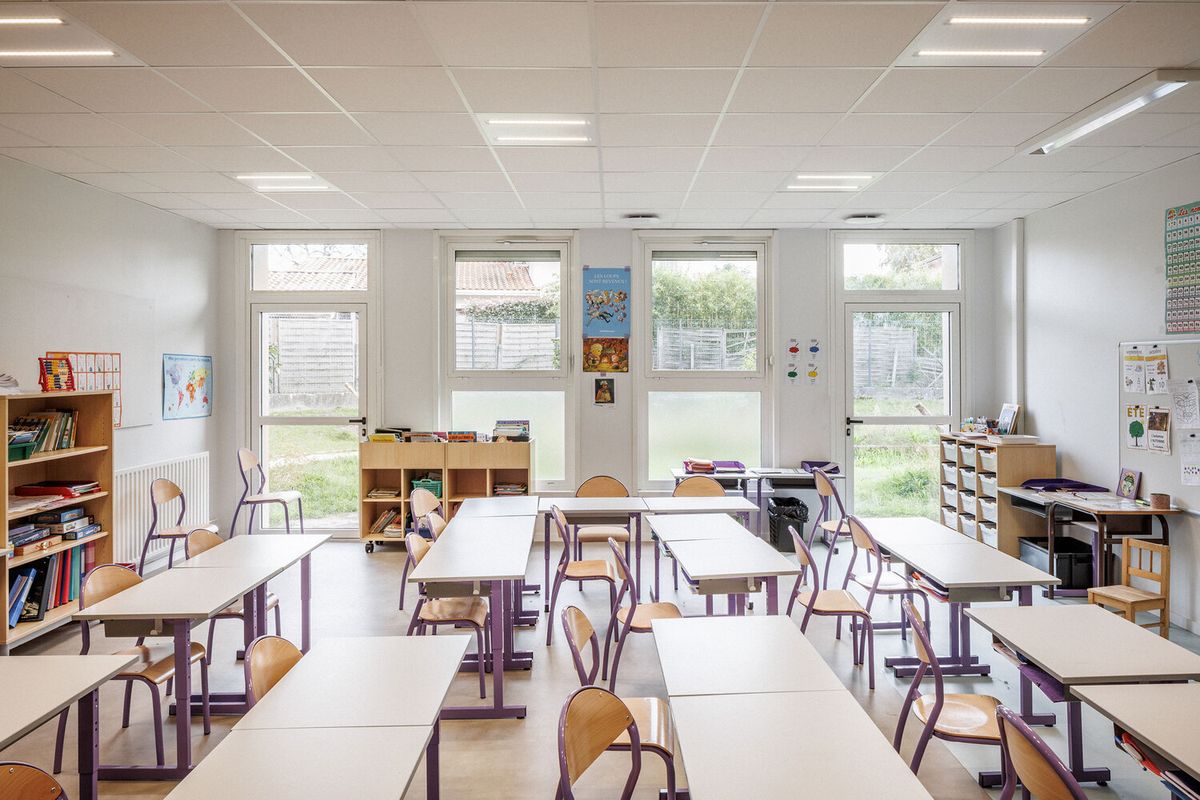
Schools commonly purchase furniture in two or three size categories (small, medium, large) intended for broad age ranges. The sizing logic assumes that all 7-year-olds fit "small" furniture and all 12-year-olds fit "medium." The reality: within any single age group, height and weight vary by 30–40%.
Age Group | Height Range | Weight Range | Standard Size Category | % of Students with Poor Fit |
6–8 years | 110–130 cm | 18–30 kg | "Small" | 35% (too large for shortest) |
9–11 years | 130–150 cm | 25–45 kg | "Medium" | 28% (range too wide) |
12–14 years | 145–170 cm | 35–65 kg | "Large" | 30% (too small for tallest) |
15–18 years | 155–185 cm | 45–85 kg | "Large" (same as 12–14) | 40% (inadequate for growth) |
The "large" category serving both 12-year-olds and 18-year-olds is the most problematic. A desk height appropriate for a 145 cm 12-year-old forces a 180 cm 18-year-old into spinal compression. Conversely, a desk height set for the 18-year-old makes the 12-year-old hunch forward.
Improper sizing affects more than posture. A 2024 study from the University of Lisbon found that students in poorly fitted desks scored 7% lower on sustained-attention tasks and reported 3x more physical discomfort complaints compared to students in properly fitted furniture. The discomfort isn't just physical — it's cognitive, because chronic low-level pain consumes attention bandwidth that should be directed at learning ([Link to: /adjustable-classroom-desks.html](Link to: /adjustable-classroom-desks.html)).

The fifth danger is the least visible but the most legally consequential: classroom furniture that doesn't accommodate students with physical disabilities, sensory sensitivities, or neurodivergent needs.
Standard classroom desks and chairs assume a user who can sit upright, see over the desk surface, grip standard edges, and tolerate the noise and vibration of hard-surface seating. For students with mobility impairments, visual limitations, grip weakness, or sensory processing differences, standard furniture creates barriers that violate accessibility mandates.
Accessibility Need | Standard Furniture Response | Barrier Created | Required Adaptation |
Wheelchair access | Fixed desk, no clearance | Can't approach desk | Adjustable/lift desk with open base |
Visual impairment | Standard surface, no contrast | Can't locate desk edges | High-contrast edge banding |
Grip weakness | Standard desk edge, round profile | Can't stabilize | Flat-grip edge, textured surface |
Sensory sensitivity (ASD) | Hard plastic/metal, reflective | Overstimulation | Matte finish, padded seat, muted color |
Mobility limitation | Fixed chair, no swivel | Can't reposition | Swivel or castor-based seat |
Hearing aid compatibility | Metal-on-metal contact noise | Interference/feedback | Rubber foot pads, soft-close hinges |
The legal dimension is significant. In China, the Regulations on the Education of Persons with Disabilities (2017 revision) mandate that educational institutions provide accessible learning environments. In the US, ADA Title II applies to all public schools. In the EU, the European Accessibility Act (effective 2025) covers educational furniture as part of the built environment mandate.
Cost of non-compliance:
Non-Accessibility Cost | Amount Range |
Legal complaint/audit response | $10,000–$50,000 |
Retrofitting existing furniture | $80–$200 per unit |
Parent/community reputation damage | Unquantifiable |
Student exclusion and learning loss | 5–15% performance gap per excluded student |
Proactive accessible furniture procurement adds 10–15% to total furniture cost but eliminates retrofitting expenses, legal risk, and the fundamental ethical problem of furniture that excludes students from learning.

Standard | Region | Coverage | Key Requirement for Schools |
GB/T 3324–3325 (China) | China | General furniture safety | Stability, formaldehyde limits |
EN 1729 (EU) | Europe | School furniture specifically | Size ranges, posture requirements |
ANSI/BIFMA X5.1 (US) | USA | Chair safety | Stability, load testing |
ISO 5970 | International | School furniture dimensions | Height-to-size ratios |
GREENGUARD Gold | Global | Low chemical emissions | VOC/formaldehyde limits for schools |
BS EN 16139 (UK/EU) | UK/Europe | Seating strength/safety | Tip-over testing |
Most school procurement specifications reference only one or two of these standards — typically the cheapest compliance path. A comprehensive specification should reference at least four, combining dimensional requirements (ISO 5970 or EN 1729), chemical safety (GREENGUARD Gold), structural safety (BIFMA or EN 16139), and regional regulatory compliance.
Danger | Root Cause | Solution | Cost Impact |
Posture-destroying desks | Fixed height, one-size logic | Adjustable-height desks | +15% upfront, -70% hidden cost |
Toxic materials | Budget composite, E2-grade | E0-grade specification | +15–20% upfront, eliminates 6-month off-gas |
Unstable chairs | Narrow base, high seat | Wide base (45+ cm) or sled base | +10% upfront, -90% tip-over risk |
Improper sizing | 2–3 size categories for wide ranges | 5+ size categories or adjustable | +20% upfront, -7% attention loss |
Lack of accessibility | Standard-only procurement | Accessibility-included specification | +10–15% upfront, eliminates legal/exclusion cost |
Q: How quickly can a school transition from dangerous furniture to safe alternatives?
A: Most schools replace furniture in phases — starting with the highest-risk areas (primary classrooms where height mismatch is greatest, and special education rooms where accessibility is critical). A full transition for a 500-student school typically takes 2–3 budget cycles. Prioritize by danger severity: adjustable-height desks first, then stability-rated chairs, then material-grade upgrades ([Link to: /school-furniture-replacement-guide.html](Link to: /school-furniture-replacement-guide.html)).
Q: Are adjustable-height desks durable enough for classroom use?
A: Modern adjustable-height school desks use gas-lift or mechanical crank mechanisms rated for 5–7 years of daily adjustment. The gas-lift models are faster (5 seconds to adjust) but cost 15% more. Crank models are slower (20 seconds) but have fewer components that can fail. Both are more durable than fixed desks in the metrics that actually matter — because a fixed desk that's the wrong height is "durable but harmful," which isn't a win.
Q: What's the minimum stability specification for classroom chairs?
A: Require a Stability Index (base width / seat height) of at least 1.0. This means a chair with a 40 cm seat height must have a base width of at least 40 cm. For added safety in primary classrooms (where rocking is most common), specify 1.1 or higher — which means a 40 cm seat requires a 44+ cm base. Sled-base chairs automatically exceed this threshold and are the safest option for primary grades.
Q: How do we verify that classroom furniture meets chemical emission standards?
A: Request GREENGUARD Gold certification (or equivalent regional certification) from the manufacturer before purchase. GREENGUARD Gold specifically tests for school-environment emission limits, which are stricter than general indoor limits. If the manufacturer can't provide certification documentation, assume the furniture exceeds safe emission levels and reject the specification. No certification = no proof of safety.
Hongye Furniture Group (鸿业家具集团) produces education furniture at hyeducationfurniture.com that addresses all five dangers documented above. The company's school furniture line includes adjustable-height desks, stability-rated chairs (Stability Index ≥ 1.1 across all models), E0-grade material specification as standard, and accessibility-compliant options across every product category. Manufactured in Hongye's 200,000 m² Guangdong facility, the education furniture division serves schools and universities in 60+ countries with products certified to GB/T, EN 1729, and GREENGUARD Gold standards. Hongye's approach to education furniture is built on a simple principle: school furniture should protect students, not endanger them — and safety shouldn't be a premium add-on, it should be the baseline specification.
Need classroom furniture that meets real safety standards? Browse Hongye's education furniture catalog at [Link to: /education-furniture-catalog.html](Link to: /education-furniture-catalog.html).


 English

