
Views: 0 Author: Senior FF&E Procurement Specialist Publish Time: 2026-10-14 Origin: Site


Key Takeaways
- Classroom, library, laboratory and dormitory furniture is exhibited in Phase 2 of the 140th Canton Fair, 23-27 October 2026, at the fair complex in Guangzhou (China Foreign Trade Centre, 2026).
- Phase 1 (15-19 October) covers hardware, tools and lighting, and Phase 3 (31 October-4 November) covers health and medical products; neither replaces a Phase 2 visit for education furniture.
- A buying brief structured by room type turns booth conversations into quotations you can actually compare line by line.
- Write EN 1729 size marks and test reports into the tender specification before you travel, so every supplier answers against the same document.
- The changeover windows (20-22 October and 28-30 October 2026) are the practical days for a factory audit near Guangzhou, while halls are closed for rebuilding.
- Compare quotations per line item — specification, size mark, material, packaging, installation — never by total price alone.
- Hongye Furniture Group confirms it exhibits at the 140th Canton Fair but does not publish its stand number: leave your contact details and project scope, and our team replies one-to-one with the stand number and a visit invitation letter.
School and campus furniture — classroom desks and chairs, lecture hall seating, library shelving, laboratory benches and dormitory casegoods — is exhibited in Phase 2 of the 140th Canton Fair, from 23 to 27 October 2026. That is the single most useful date for an education procurement team to put in the calendar. The fair is the largest trade exhibition in China, and the 139th edition drew 314,000 overseas buyers from 220 countries and regions (China Import and Export Fair official website, 2026), so walking it without a written plan is the fastest way to lose two days. This checklist is written for the way schools and campus projects are actually bought: against a tender document, against a room list, and against standards that a school board can verify.
Education furniture sits inside Phase 2, the quality-home phase running 23-27 October 2026 (China Foreign Trade Centre, 2026). The furniture, building material and home decoration sections of this phase contain the classroom and campus product groups a school buyer needs: single and double student desks, classroom chairs across every age group, teacher desks and lecterns, library and study seating, dormitory beds and wardrobes, laboratory benches and fume-cupboard-compatible worktops, canteen furniture and storage for sports equipment.
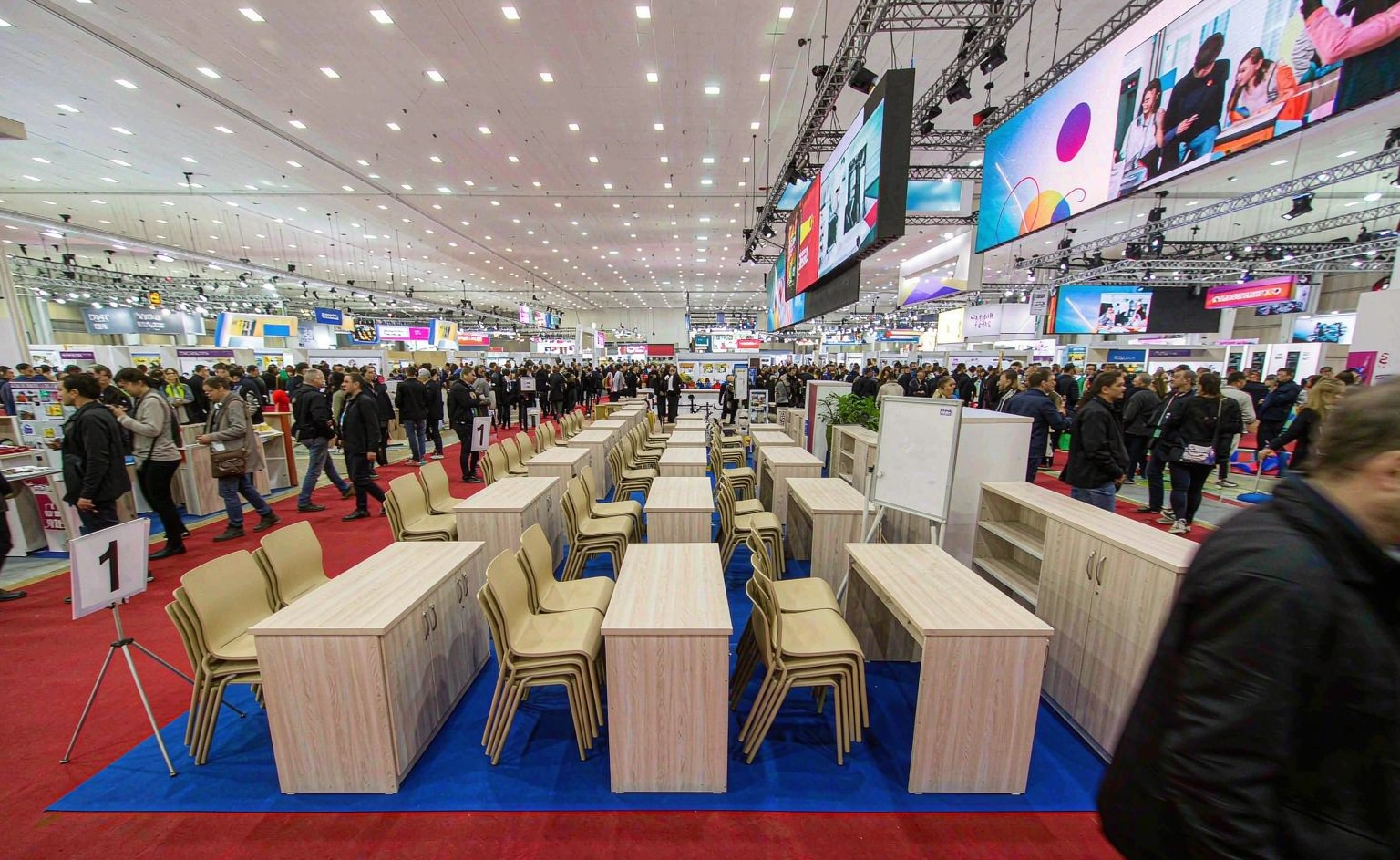
Two neighbouring phases matter for different reasons. Phase 1 (15-19 October 2026) is the advanced-manufacturing phase: hardware, hinges, locking systems, tools and lighting. It is useful if your project includes laboratory services, workshop machinery or a campus-wide lighting package, but you will not find finished classroom furniture there. Phase 3 (31 October-4 November 2026) is the health-focused phase, which is where medical and care furniture is exhibited; it also overlaps with canteen and kitchen equipment for campus catering.
The scale of the venue makes planning unavoidable. The exhibition covers roughly 1.55 million sqm and around 32,000 exhibitors across the three phases (China Import and Export Fair official website, 2026), and the complex at No. 382 Yuejiang Middle Road, Haizhu District, Guangzhou opens for business talks from 09:30 to 18:00 each day. A school buyer who tries to "see everything" sees nothing well; the checklist below is designed so that two days in Phase 2 plus one factory day between phases is enough to build a defensible shortlist.
Classroom furniture is one of the few furniture categories where the standard is genuinely age-specific, so the specification has to carry the standard references, not the supplier's brochure. The table below is the set an education tender normally cites — fix these in the document before you travel, and every booth conversation becomes a conformance check instead of a sales conversation.
Standard | What it covers | Where to cite it in the tender |
EN 1729-1 | Functional dimensions of educational furniture — seat and desk heights graded by size marks matched to age groups | State the size mark (or age range) per room type, not just "student desk" |
EN 1729-2 | Safety, strength and stability requirements and test methods for educational tables and chairs | Require a current test report per product family, issued by a recognised laboratory |
ANSI/BIFMA | General furniture safety and durability testing, used where the specification follows US practice | Acceptable alternative when the campus follows US-published specifications |
GREENGUARD Gold | Low chemical emission (VOC) certification for indoor products | Cite for classrooms and libraries where indoor air quality thresholds apply |
FSC | Chain-of-custody certification for timber-based materials | Cite in tenders with sustainability or procurement-policy clauses |
Two practical notes from project work. First, a size mark is a property of the furniture, not the student: a single classroom often needs two adjacent size marks, so the buying brief should carry both rather than one "average". Second, emission certification matters more in education than in most contract sectors because classrooms are small, densely occupied rooms; GREENGUARD Gold is the reference most school tenders recognise, and our own production carries it alongside BIFMA, FSC and CE conformity. If your tender cites a national variant of EN 1729, name the exact edition — "or equivalent" is where disputes start.
A buying brief is the document that makes a fair trip comparable. Suppliers meet hundreds of visitors; the ones who leave with a structured brief get structured answers. Prepare it as a room-by-room list rather than a product wish list, and take it to Phase 2 in a versioned PDF plus a printed copy.

Brief field | Why it matters | Example entry |
Room list with quantities | Anchors every quotation to the same scope | 24 standard classrooms, 2 science labs, 1 library, 180-bed dormitory |
Floor area and ceiling height per room | Determines desk spacing, storage depth and installation method | Standard classroom 8.4 × 6.6 m, ceiling 3.2 m |
Age groups per room | Maps directly to EN 1729 size marks | Grade 7-9 (size mark 4-5); Grade 1-3 (size mark 2-3) |
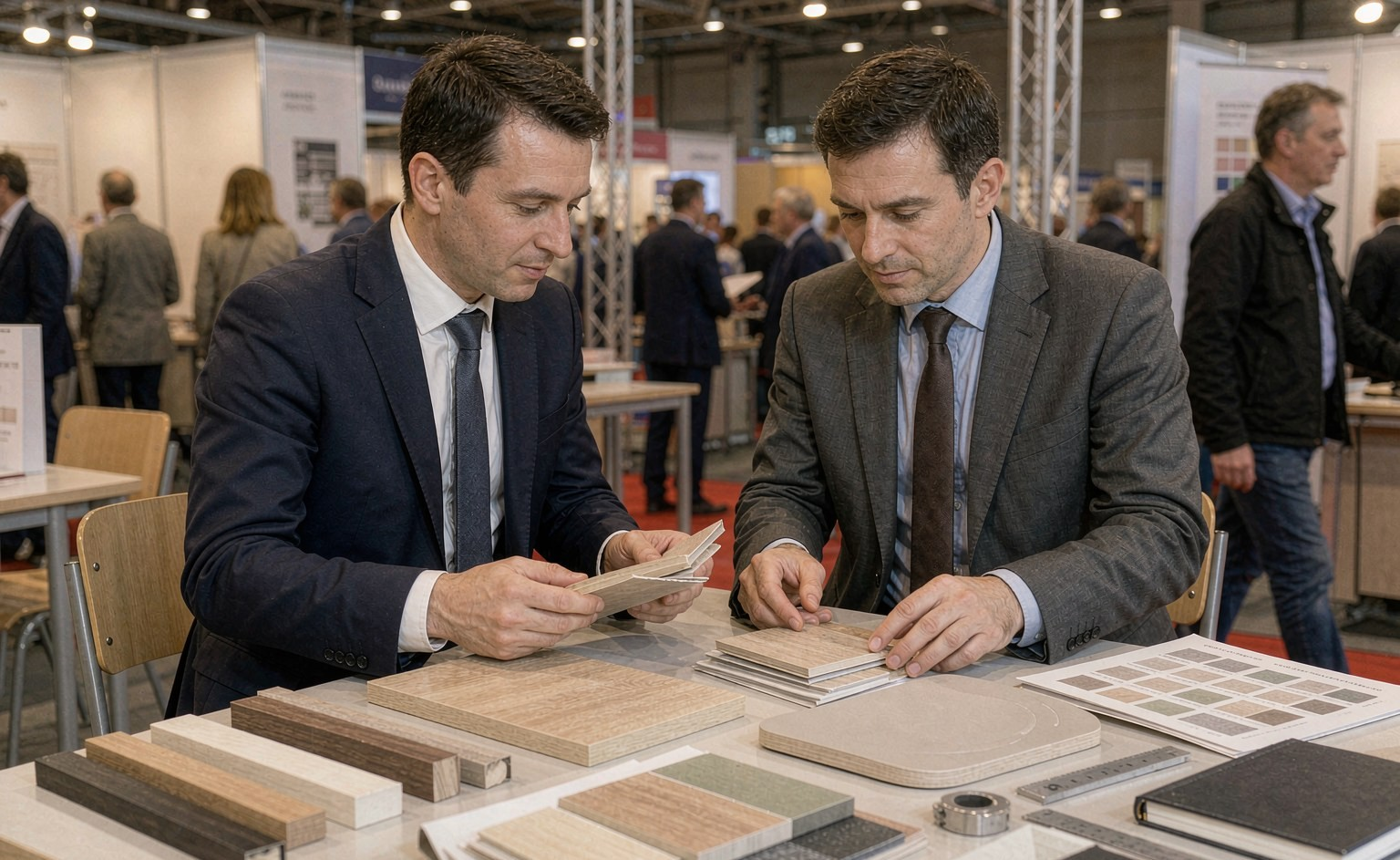
Material and colour direction | Sample comparison at the booth stays within palette | 18 mm melamine board, anti-bacterial edge band, 3 approved colours |
Budget envelope per room type | Keeps negotiation on package scope, not single-item discounts | Classroom package per room, excluding installation |
Installation window and site conditions | Confirms what the supplier must deliver on site | Installation during winter holiday, lift access available |
One more field earns its place in most campus tenders: the mock-up requirement. Asking each shortlisted supplier to produce a full mock-up classroom or a sample dormitory module before mass production is the cheapest risk control available to a school project, because every misunderstanding about edge banding, hardware, colour or spacing surfaces in a workshop in Guangdong instead of on your campus. Confirm the mock-up process, the review procedure and the revision loop at the booth, in writing.
The fair calendar gives education buyers two natural factory windows: the changeover breaks between phases, 20-22 October and 28-30 October 2026, when the halls are closed for rebuilding and exhibition staff are off duty (China Foreign Trade Centre, 2026). Our own factory in Heshan, Jiangmen is roughly two hours from Guangzhou by car, and we schedule buyer visits on exactly these days.

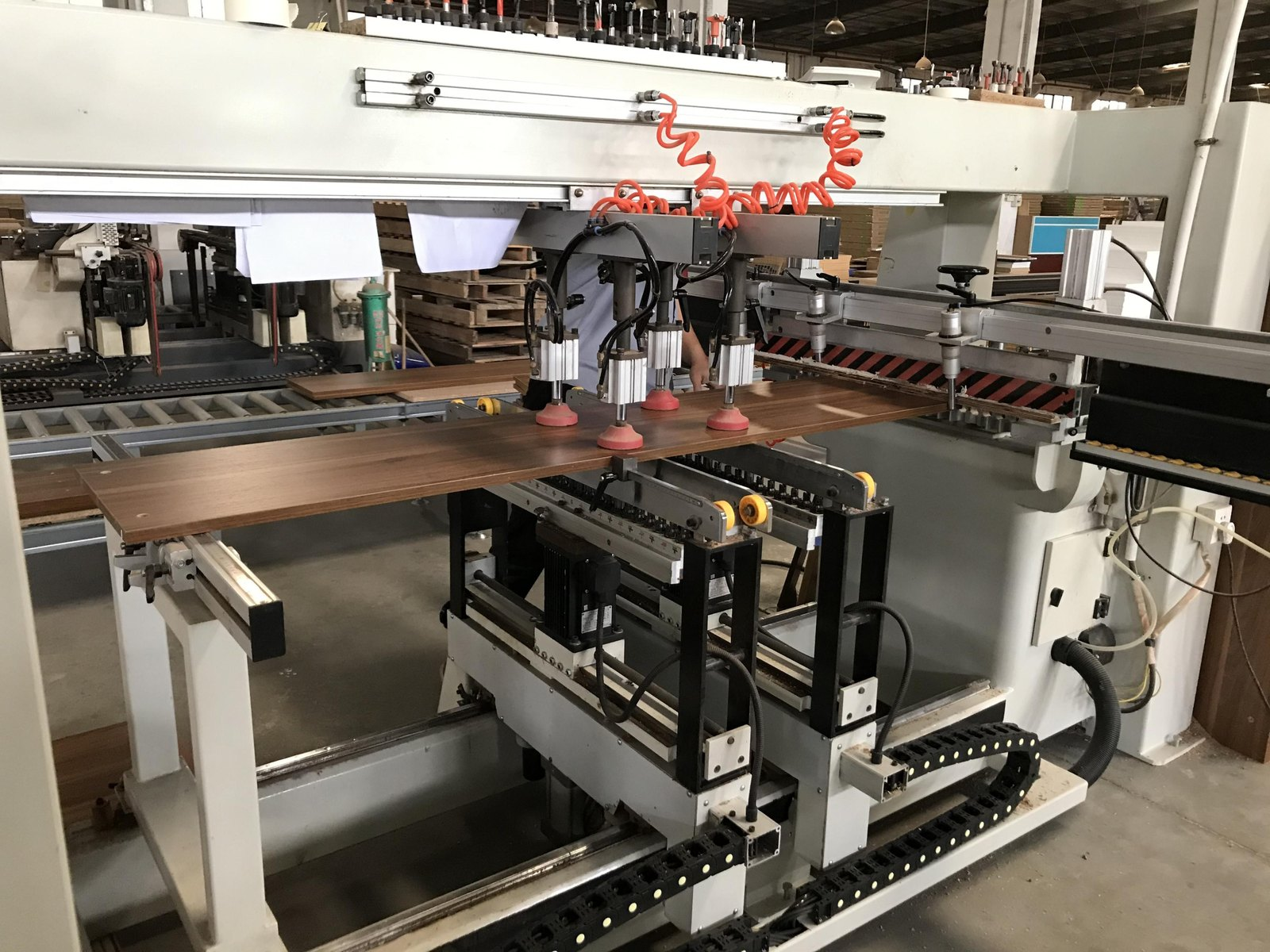
A factory day should verify the four things a booth cannot show:
- Panel and frame production — whether the desks, chairs and storage you specified are produced on controlled lines, with the edge banding, drilling and finishing quality you saw in samples.
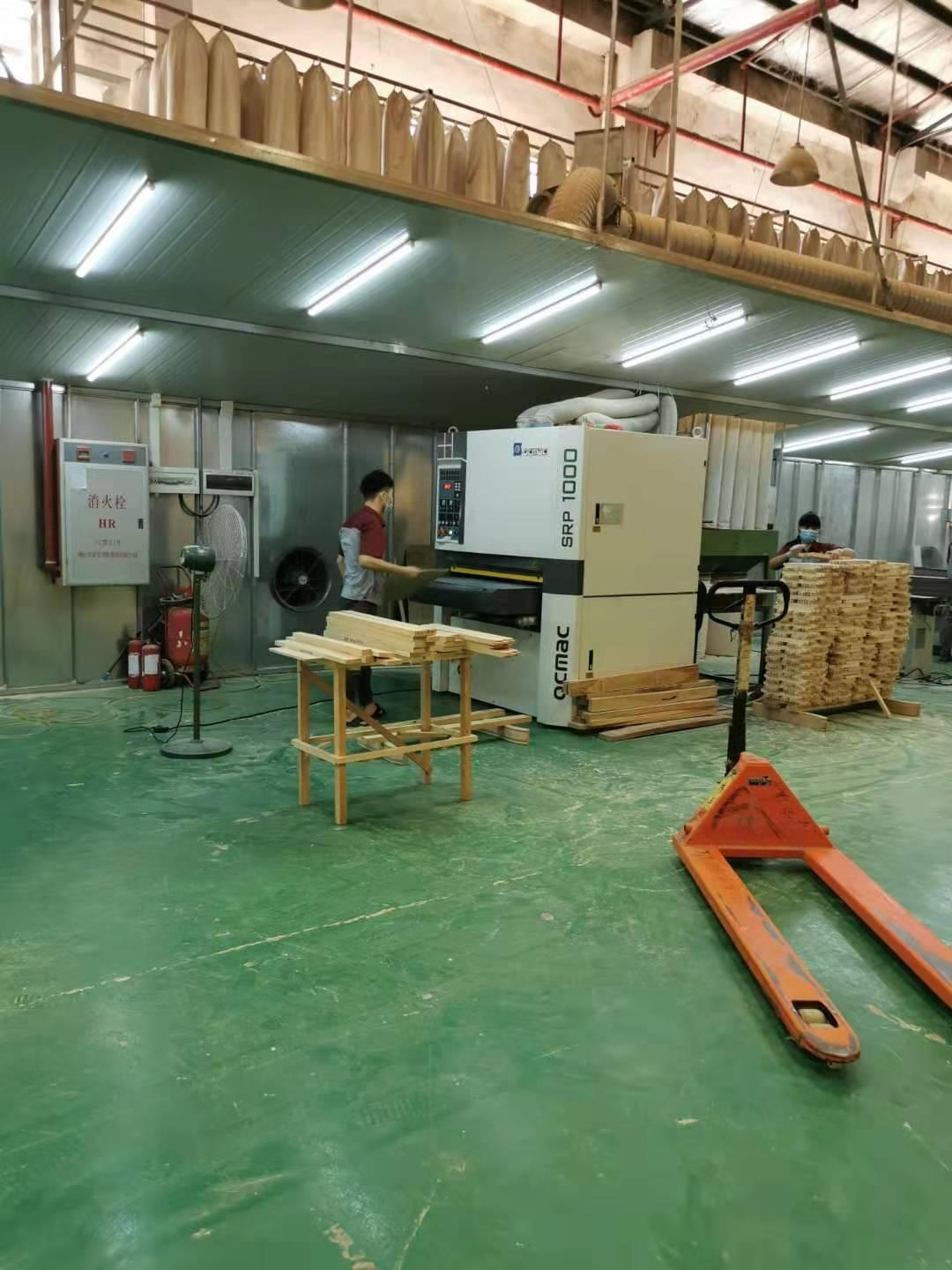
- Material storage and batching — how boards, solid wood and hardware are staged for a project, which is what keeps a 24-classroom order consistent from the first room to the last.
- Packaging and export engineering — flat-pack versus assembled ratios, carton specifications and corner protection, which decide how much of your installation budget survives shipping.
- Quality control points — where test reports, size-mark checks and emission documentation are produced, because the tender file will eventually need them, not just the samples.
We manufacture project furniture since 1996 on a 300,000+ sqm own base in Heshan, Jiangmen, Guangdong, with 1,000+ skilled workers delivering more than 1,000 projects to over 50 countries — and we are used to receiving school delegations on changeover days. If you are shortlisting factories for a campus project, our team can arrange the visit around your Phase 2 days; leave your contact details through our contact page (https://hyeducationfurniture.com/contactus.html) and we will confirm the schedule one-to-one.
After the fair, quotations only compare if the line items do. The table below is the comparison grid we recommend to education buyers; it forces every supplier to price the same object, specified the same way, delivered on the same terms.
Line item | Specification to fix in writing | Ask each supplier to confirm |
Student desk (e.g. 1,200 × 600 mm) | Top thickness, edge band type, size mark, frame finish | Test report reference, packing method |
Student chair | Shell material, frame gauge, size mark, floor glides | Stackability, replacement parts availability |
Teacher desk and lectern | Dimensions, cable management, lock type | Finish consistency with student furniture |
Storage and lockers | Lock system, corrosion protection, venting | Key management scheme, spare-key policy |
Laboratory benches | Worktop chemical-resistance class, service ports | Compliance documents for fume handling |
Library shelving and seating | Load rating per shelf, modularity | Extension kits, anchoring method |
Packaging | Flat-pack ratio, carton spec, corner protection | Container loading plan, moisture protection |
Installation | Scope of on-site labour, tools, supervision | Crew size, installation days for your room list |
Two figures from our own project practice anchor the commercial comparison. A typical production lead time for school furniture runs 30-45 days from approved samples to ex-factory, and factory-direct sourcing from a 300,000+ sqm base generally lands 30-50% below local retail channels for the same specification. Neither number is a promise for a specific tender — both depend on the room list, the materials and the installation window — which is precisely why the quotation grid above should carry them as line-item assumptions rather than brochure slogans.
Register as an overseas buyer on the official website before departure — the 139th edition processed 314,000 overseas buyers from 220 countries and regions (China Import and Export Fair official website, 2026), and pre-registration is what keeps your first morning out of a queue. The official fair portal (https://www.cantonfair.org.cn/en-US/index.html) publishes the phase calendar and buyer services, and the Ministry of Commerce carries the official edition announcements (MOFCOM (http://ke.mofcom.gov.cn/)).
A workable plan for a campus project:
- Day 1 — furniture sections, desk and chair rows first. Walk your room list in order, not the hall layout. At each shortlisted booth, take one sample photograph with a measuring tape in frame, collect the material chip, and write the size marks offered. Ninety minutes per row beats three hours of aimless walking.
- Day 2 — storage, laboratory and library sections, then follow-up meetings. Use the afternoon for scheduled meetings with the two or three suppliers who answered your buying brief best, and confirm mock-up terms and quotation deadlines in writing before you leave the booth.
- Changeover day — factory visit. Book it before you fly, not during the fair; the 20-22 October window is the one suppliers can staff properly. See the checklist in the factory-visit section above.
- After the trip — comparison grid first, price last. Fill the line-item grid from your notes while the details are fresh, send it to every supplier, and only then open the commercial envelopes.
Education procurement rewards the teams who treat the fair as a supplier-screening exercise rather than a shopping trip. The checklist structure — standards into the tender, brief before the trip, factory between the phases, grid before the price — is what turns three days in Guangzhou into a defensible shortlist for a school board.
Q: Where can I find school furniture at the Canton Fair?
A: In Phase 2, the quality-home phase, from 23 to 27 October 2026. Classroom desks and chairs, library, laboratory, dormitory and canteen furniture are all exhibited in the furniture and building material sections of this phase.
Q: Which standards apply to classroom furniture procurement?
A: In most tenders: EN 1729-1 for functional dimensions and size marks, EN 1729-2 for safety, strength and stability, with ANSI/BIFMA as the US-practice alternative, GREENGUARD Gold for indoor emissions and FSC for timber chain of custody. Cite the exact editions in the specification.
Q: How do I prepare a campus furniture buying brief?
A: Build it room by room: room list with quantities, floor area and ceiling heights, age groups mapped to size marks, material and colour direction, budget envelope per room type, and the installation window. Send it in advance so suppliers answer against the same scope.
Q: How many days does an education buyer need at the fair?
A: Two days in Phase 2 for the furniture sections plus one factory visit on a changeover day (20-22 or 28-30 October 2026) is a workable minimum for a campus project.
Q: How do I register for the Canton Fair as an overseas buyer?
A: Pre-register as an overseas buyer on the official fair website before travelling, then collect your buyer badge on site. An invitation letter from an exhibiting supplier supports the business-visa application; visa issuance itself is decided by the Chinese consular authorities.
Q: Can suppliers produce a mock-up classroom before mass production?
A: Established project manufacturers do this routinely, and we recommend it for every campus tender. Fix the mock-up scope, review procedure and revision loop in writing at the booth, and production starts only after the mock-up is approved; typical production lead time is then 30-45 days to ex-factory.
Q: Does Hongye Furniture Group exhibit at the 140th Canton Fair?
A: Yes, we confirm our participation in the 140th Canton Fair. We do not publish our stand number — leave your contact details, product scope and departure country through the contact page, and our team will reply one-to-one with the stand number and a visit invitation letter.


 English

